The rise of IoT devices
Connected devices are growing worldwide. We are no longer talking only about computers, phones or tablets, but also appliances, surveillance cameras, televisions and sensors. These objects are known as IoT devices, short for the Internet of Things.
IoT can be understood as the grouping and interconnection of devices through a private or public network, regardless of whether they are sensors, industrial mechanisms or household objects. Its value lies in the ability to create applications that improve both everyday life and business environments.
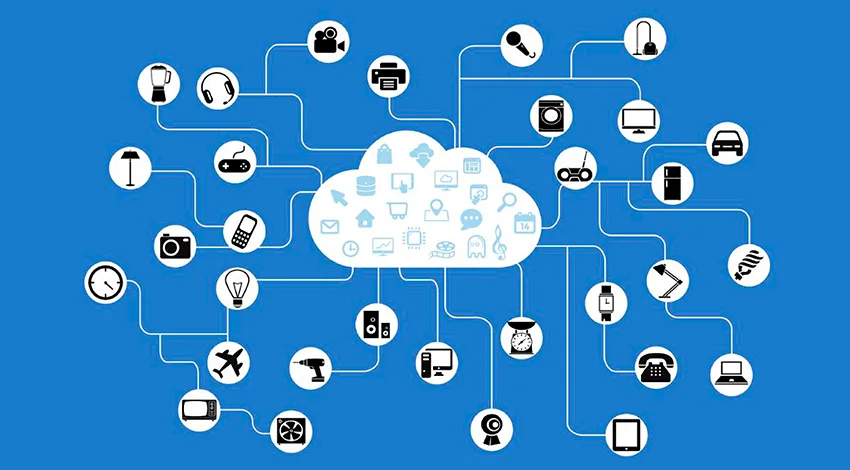
IoT, Smart Cities and LoRaWAN
Companies have evolved their products to offer not only home-automation devices, but also solutions for smart cities. Examples include sensors for bin fill levels, temperature and movement, as well as connected street lighting.
Scalability, lower infrastructure costs and global connectivity give IoT considerable strategic value and make it one of the main drivers of digital transformation.
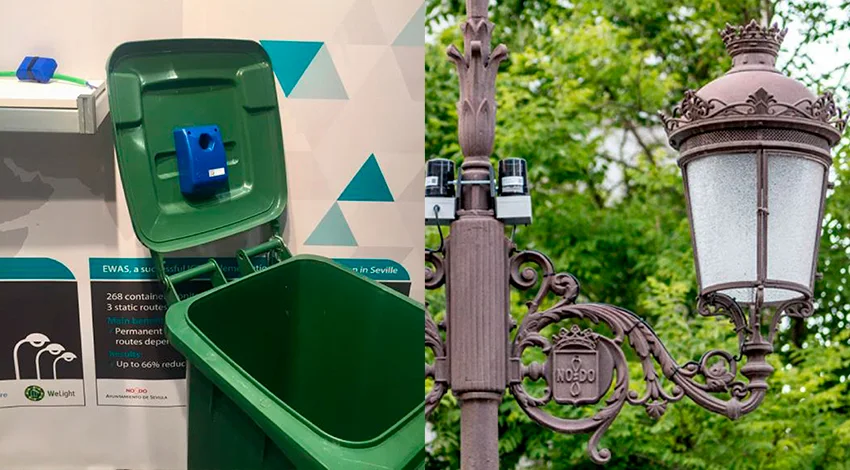
Within these infrastructures, LoRaWAN was recognized as an international ITU standard for low-power wide-area networks, known as LPWAN. It is a protocol built on LoRa radio modulation that connects devices wirelessly and manages their communication with gateways.

Network architecture and security
To understand why security is critical, we first need to know the main components of a LoRaWAN network:
- Nodes: end devices that send information and receive commands or data.
- Gateways: provide radio coverage and relay node messages to the Network Server.
- Network Server: manages network resources, validates messages and coordinates communication.
- Application Server: uses and processes the data transmitted by sensors.
Nodes and the Network Server exchange messages and keys to protect data authentication, confidentiality and integrity. Part II explains frames, OTAA and ABP modes, the JoinRequest/JoinAccept procedure and session keys.
Main risk: if an attacker obtains valid identifiers or keys, they could attempt to impersonate a node and send false information, such as manipulated temperatures, movement events or bin fill levels.
Part III analyzes the consequences of that impersonation in a smart-city environment and the basic measures that reduce the risk.